
The most popular story is that of Toni, a young apprentice working at the court of Ludovico Maria Sforza, Duke of Milan during the 15th century. According to different versions, Toni would have saved a reception by replacing the planned dessert (which has burned) with a brioche filled with dried and candied fruits. Another version is that he was in charge of checking on the dough of a celebration cake, but he let it ferment too much. However, this new story, just as unverifiable as the first one, tells us something important: the Panettone is a cake obtained by fermentation and slowness. In any case, the ‘Pan de Toni’ was born.
But there are even older traces of this brioche. We can trace its origins back to the Roman era, and from the Middle Ages, in the north of Italy, delicious sweet breads filled with various ingredients were prepared for Christian celebrations, in particular on Christmas Eve. The Lombards used to share a ‘pan grande’: each head of the family would cut a slice and distribute it to the members of the family, keeping one slice as a good omen.
This tradition blended over time with the rise of bakeries, then with the arrival of candied citrus fruits in Europe, which turned these breads into ceremonial cakes. At that time, the Panettone was a luxury treat.
It was only at the end of the 19th century that it took the form that we know today, with its rounded dome. Its basic ingredients are wheat flour type 0, sugar, eggs, butter, raisins, candied citrus peel (mainly citron and orange), yeast and salt.
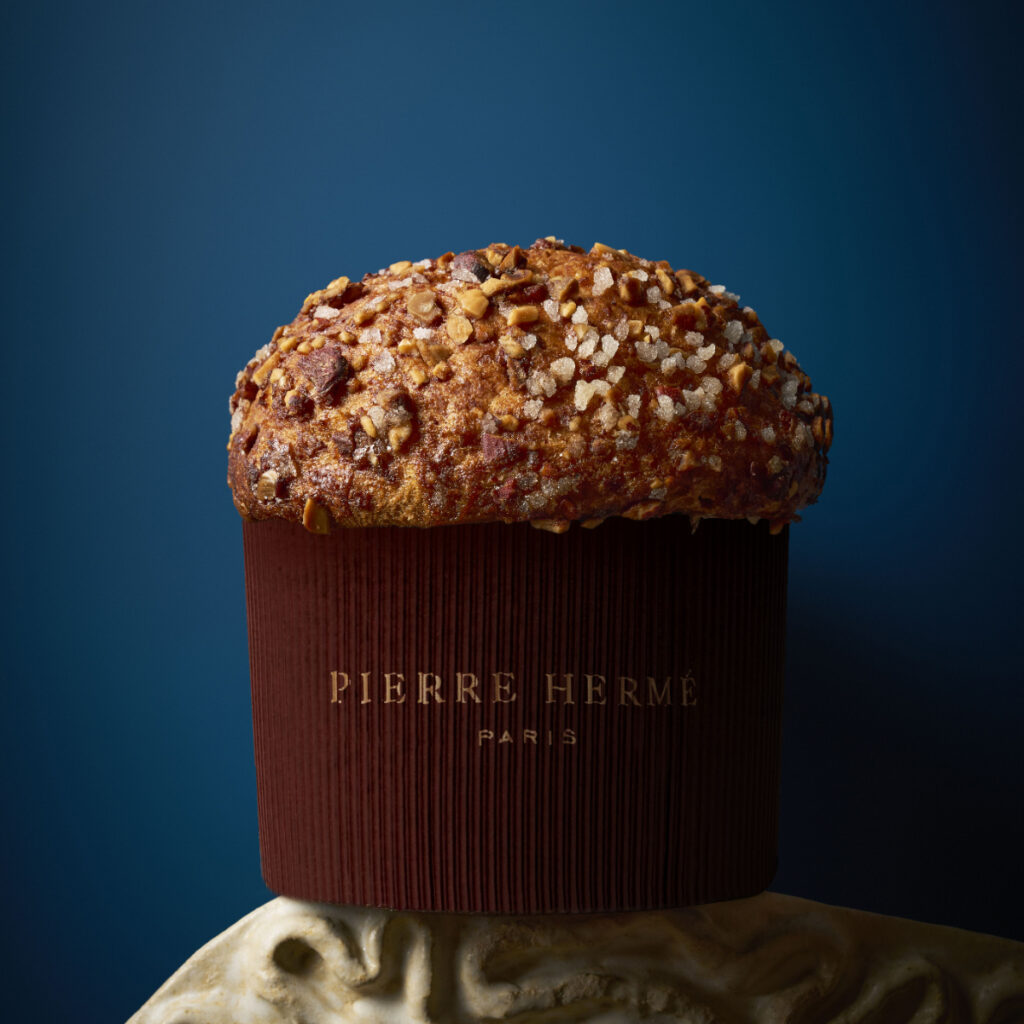
To make a good Panettone, the dough must be left to ferment for a long time, so that the yeast has time to develop a delicate, complex, and delicious range of aromas, as well as an incomparable, almost creamy, stringy crumb. But you cannot get something for nothing: this process is long and technical, full of pitfalls (the dough is very fragile). The Panettone is therefore not something that can be reproduced easily at home; its preparation reflects years of experience and the mastery of an artisan.
This explains why, during the 20th century, its production became massively industrialised. It was much easier to mechanise this time-consuming process than to restart it every night. The Panettone became an affordable product, made available throughout Italy, and went from being a family cake to a national icon, particularly at Christmas time. It was exported on a large scale.
Unfortunately, large-scale production, which is not always of the highest quality, especially for export, has blurred the image of the Panettone. Many people think of it as a dry, industrial brioche, nicely wrapped in a pretty box. Luckily, in the last few years, the hand-made production of high-quality Panettone, made with natural yeast, has developed more than ever. Taking inspiration from the work of exemplary artisans such as Luigi Biasetto, Relais Dessert in Padua, and winner of the 1997 World Pastry Cup, Italian and international bakers and pastry chefs are turning Panettone into a festive treat that everyone can appreciate.
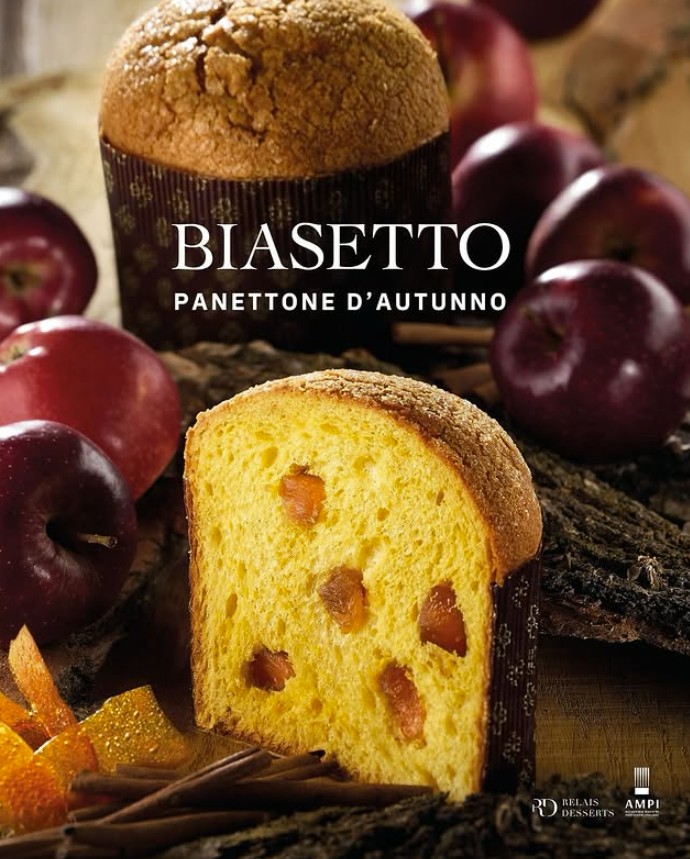
Even in France, Panettone lovers now go out of their way to try the best Panettones in the city, and leading bakeries create their own recipes: from Pierre Hermé (Panettone Ispahan or Infiniment chocolat) to Maison Sève in Lyon (Panettone with gianduja), there are many who offer their own carefully developed creations for the festive period. Sharing knowledge, as is the practice within the Relais Desserts association, is extremely valuable in this work.
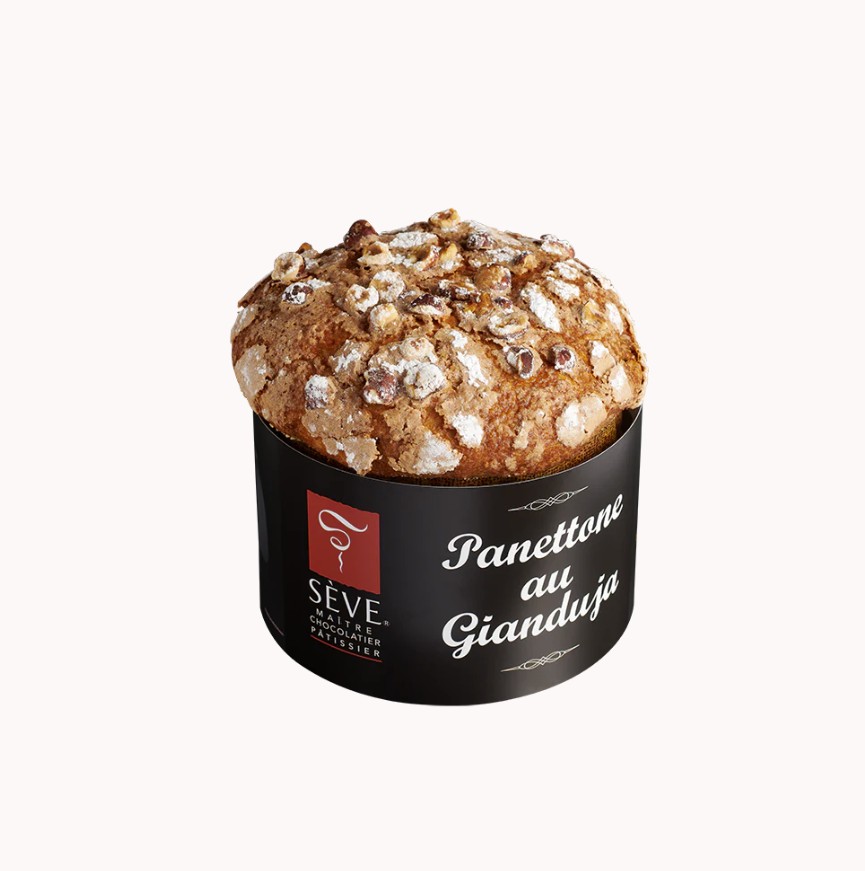
In conclusion, today’s wonderful Panettones combine their yeast-fermented ancestral character with different enhancements: creamy fillings, dried fruits, grand cru chocolate, crunchy icing, and so on. The Milanese Christmas cake has become an amazing means of expression for signature pastry chefs. So, do not delay in placing your orders for the festive season, because there is not always enough for everyone…