In French patisserie, lemons were initially used as an acidity regulator (raw juice), as a secondary flavouring (zest), or as a confectionery (marmalade). Published in 1873, Alexandre Dumas’ dictionary lists these preparations and other types of syrup, but there is no mention of lemon curd. This invention, that is now the main ingredient in lemon tart, comes from England.
Its origins date back to the 18th century, when it first appeared within a Quaker community. The craftsmen of the time created an amazing recipe: a cream made from lemon juice, sugar and egg yolks, which was cooked until it coagulated. This ‘lemon curd’ was an immediate success. It can be used in cakes, enjoyed on its own or spread on a slice of bread like a sweet and tangy spread, and opens the door to new ways of treating yourself.
It was in the United States, on the other side of the Atlantic, that the first truly identifiable lemon tart was born. In Florida, the famous ‘Key Lime Pie’ has made a name for itself as a regional speciality, based on lime, and remains hugely popular. It is said that sailors used to take it on board: it was easy to store, rich in citrus fruits and a good way to combat scurvy (a good excuse to eat it!)
But what about the meringue? In France, at the beginning of the 20th century, even though lemon tart was not yet displayed in shop windows, Italian meringue was already extremely popular. Meringue was often used on top of flans and various other desserts, such as cooked apples. So who decided to combine meringue with lemon curd? This ingenious idea is often attributed to Alexander Frehse, a pastry chef from French-speaking Switzerland. The intention was clear: to counterbalance the acidity of the lemon with the sweetness of the meringue, while giving it a beautiful appearance!
This was a new trend, and lemon tart became a staple on our tables and restaurant menus. Today, it remains an integral part of bistro tradition.
But be careful not to saturate the palate. When making lemon tart, balance is essential: too much sugar removes the freshness, and too much acidity causes an unpleasant experience. The art of the artisan pastry chef is all about finding the perfect balance between tanginess and sweetness.
The quality of citrus fruit production in France has improved significantly and, as a result, lemon tarts are now more delicious than ever. Topped with meringue, covered with whipped cream, accompanied by simple egg whites cooked in a floating island style, or presented in its simplest form, lemon tart remains the queen of winter fruit tarts.
Upon his arrival on the French Riviera, Jérôme de Oliveira offered a very elegant version that is still hugely popular today.
At Maison Guillet in Romans-Sur-Isère, we love it decorated with beautiful swirls of Italian meringue, lightly browned with a blowtorch.
In Alsace, Thierry Mulhaupt draws inspiration from the American Key Lime Pie and creates a delicious lime tart, sublimated by a hint of basil.
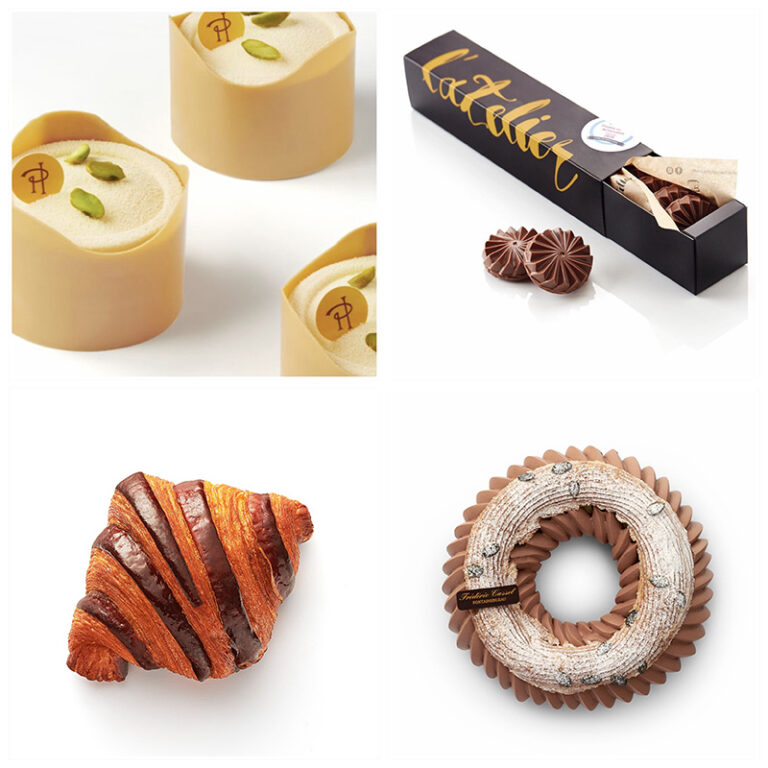
And in Fontainebleau, Fréderic Cassel creates a remarkably refined lemon tart, combining pine nuts with the king of citrus fruits.
No doubt, you only need to take a look at the shop windows of Relais Dessert artisans to realize that lemon tart is an endless source of inspiration for contemporary pastry chefs.